Guides · · 5 episodes
Chinese Brands Entering the UK: Employment Law, Warehousing, TikTok and AI
In brief
Five guests working on the ground in the UK explain the pitfalls for Chinese companies entering the UK: job adverts cannot specify age or gender, and redundancy and dismissal follow separate processes. Overseas warehousing means accounting for returns, under-declaration and security, TikTok live selling hinges on the team and local hosts, and Chinese goods and AI apps must also clear tariffs, privacy rules and IP licensing.
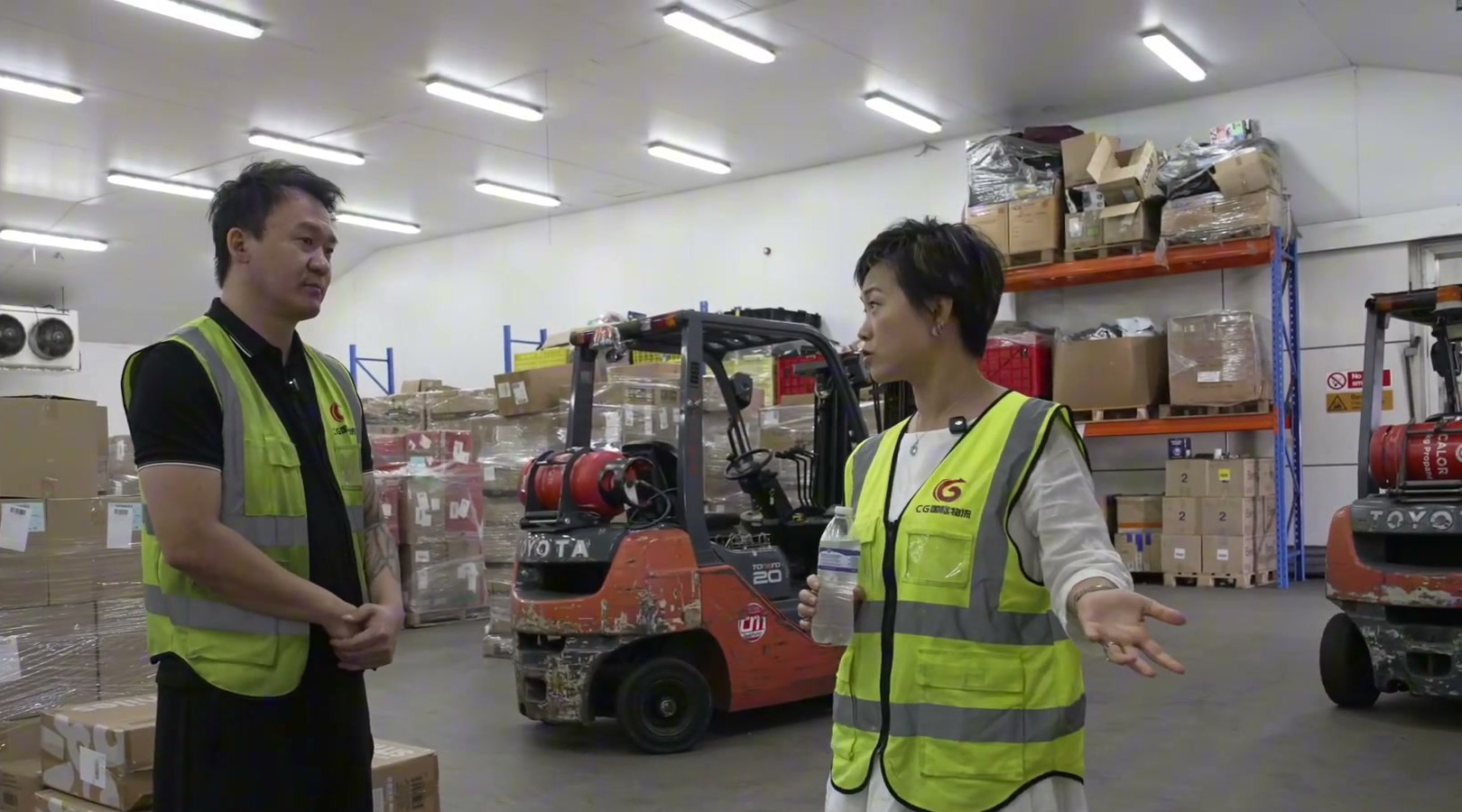
This guide brings together five episodes of Jojo聊海外, Jojo's Chinese-language interview show: Xiaolu (小璐), an HR consultant who has worked in London for 15 years; Xiaobao (小宝), who has run an overseas warehouse in the UK for 15 years; Joe, who runs TikTok Shop live streams in the UK; Emily, who brought Mind Act Upon Mind (心相印) tissues to the UK as their master distributor; and Tony, who founded IPVISE as his third start-up. Everything below reflects the guests' own experiences and views, and each point is referenced. The transcripts are machine-generated, so please check details against the original videos, and consult a professional on anything involving law or tax.
Hiring and contracts: don't bring habits from China straight over
Xiaolu says the most common pitfall she sees is copying Chinese-style job adverts, for example listing "male, under 35" as a requirement, which in the UK would breach anti-discrimination law. Often an HR team in China deals directly with UK headhunters and agencies and passes on the requirements they are used to at home unchanged.
Nor can you ask candidates for a health certificate before interview. Her approach is to ask employees to fill in a health questionnaire after an offer is made or once they start, then make adjustments as needed: a hotel once hired a pastry apprentice with a severe nut allergy and, rather than dismissing him, kept him away from tasks involving nuts, which colleagues took over.
Employment contracts and staff handbooks must comply with UK employment law. In handling employment disputes, Xiaolu has seen contracts borrowed from other companies or written with AI, some citing US law and some with long-outdated clauses. Her view is that saving a little money now with a non-compliant contract leads to much bigger losses if a dispute arises later.
Termination is the umbrella term and redundancy is one kind of it. As she explains it, redundancy means the role is no longer needed; you must talk to the employee one to one and first try options such as redeployment or moving to part-time. Employees with under two years' service are not entitled to statutory redundancy pay, but must still be given notice. Please consult a professional for your specific situation.
Xiaolu · 11:20 ↗Xiaolu · 12:23 ↗Xiaolu · 13:20 ↗Xiaolu · 13:51 ↗
Managing local staff: compliance red lines and communication
Xiaolu warns that if an employee blows the whistle on the company breaking the law, for example on health and safety, or complains of sexual harassment, and the company dismisses or treats them differently as a result, it faces serious risk and compensation, and this protection has no length-of-service threshold. She also lists underpaying the minimum wage and paying wages in cash as pitfalls to avoid. Please consult a professional for your specific situation.
Xiaolu · 18:06 ↗Xiaolu · 18:38 ↗Xiaolu · 19:08 ↗Xiaolu · 19:56 ↗
When an employee makes a minor mistake, many Chinese-owned businesses' first instinct is to dock their pay. Xiaolu says this is not allowed unless the contract and staff handbook already provided for it before they joined. Criticism must also be about the issue, not the person: she gave the example of a director who said a manager just back from maternity leave had gone "slow in the head since becoming a mum", and remarks aimed at someone personally like that are completely unacceptable.
Jojo and Xiaolu both think the idea that local staff are "hard to manage" is largely a misunderstanding: they have been encouraged since childhood to question things and think critically, and when they voice a different view they want to be heard. Heated discussion about the issue rather than the person is healthy; conversely, treating an employee differently after they raise a complaint may engage the legal protections for employees.
In several disputes Xiaolu handled recently, the employees had received a dismissal letter without any prior conversation, and even those still on probation, upset in the moment, went on to bring claims. She recommends talking to people early and giving them a chance to improve. Replacing staff is costly too: as worked out on the show, a headhunter's fee is roughly 20% of annual salary, and if the person leaves within a year you have to hire again.
Xiaolu · 49:04 ↗Xiaolu · 51:04 ↗Xiaolu · 43:50 ↗Jojo聊海外 · 44:18 ↗
Overseas warehousing: customs clearance, returns, under-declaration and security
Once goods reach the UK, Xiaobao's overseas warehouse handles customs clearance, collection into the warehouse, sorting, shelving and syncing stock to the system; sellers in China view the system and send instructions, and the warehouse packs and ships. He advises sellers to plan ahead: space is often fully booked in peak season, and if you only look for a warehouse when you feel the time is right, it is too late.
How returns are handled directly affects sellers' profits. A normal return is signed for, photographed and given a basic check; if it is usable it goes back on the shelf, and if not the customer decides whether to destroy it, after which it is cleared from the system and no more storage fees accrue. Only when a whole batch shows the same problem is it shipped back to China in bulk. Charities require donations to be usable, so returns that haven't been fully checked are hard to donate.
Xiaobao · 3:08 ↗Xiaobao · 15:04 ↗Xiaobao · 15:58 ↗Xiaobao · 16:54 ↗
Xiaobao says that because the client entities are in China, if the warehouse files customs declarations on their behalf it bears the risk on the declared value, and some clients under-declare. The warehouse carries out due diligence, checking the company entity, business licence, legal representative's address and the goods' online value, but it cannot see what is actually inside the container, so it can only judge from experience whether to take the job.
Early on, to save money, he did not install an alarm system; the warehouse was burgled, all the valuable goods were taken, and he had to compensate customers. Now every warehouse has the highest level of security connected to the police. He also notes that insurers require compliance with fire safety and other rules, and claims may be refused if you fall short; high-value cargo insurance is very hard to obtain in the UK.
Xiaobao · 25:42 ↗Xiaobao · 26:38 ↗Xiaobao · 27:23 ↗Xiaobao · 28:02 ↗
TikTok live selling in the UK: a higher bar than you might think
Joe explains that marketplace e-commerce is "people looking for products", whereas in content e-commerce people come across something while scrolling and buy on emotion and latent need. Live rooms are sorted into traffic pools from T1 to T5, and at cold start you may have fewer than ten viewers; every 5 to 15 minutes the platform "races" live rooms at the same level, and only those with better engagement and conversion data are pushed up to the next level.
He breaks the chain for a Chinese brand selling into the UK into: first-leg logistics, customs clearance, local delivery, overseas warehouse storage and dispatch (where, he says, accuracy may need to reach 99.9%), driving traffic through live streams and short videos, last-mile delivery, customer service and data feedback, then local finance, tax and legal compliance, and finally foreign exchange and payments, a very long chain.
On the team side, operations staff are mostly Chinese, because they know the Douyin ecosystem and execute well, but hosts must be British locals. Joe says hosts who are hardworking, punctual and reliable and can also think on their feet are very hard to find, and that this is the biggest challenge of live selling abroad. So they built a central support system: as long as a new host presents well and speaks clearly, they can reach 80–90% of a top host's return on spend within a week.
He has three pieces of advice for anyone wanting to get into the business: if you have no background in live streaming or a related industry, he does not recommend it, as the technical barriers are high; as a service provider, take the client's point of view, as the core is helping clients make money rather than making money yourself; and the algorithm keeps changing, so you can never stop building your skills. He also admits one mistake he made was concentrating resources in admin, so the front-line people creating value were not rewarded enough.
Joe · 17:11 ↗Joe · 17:56 ↗Joe · 18:53 ↗Joe · 19:06 ↗Joe · 13:53 ↗
Bringing Xinxiangyin tissues to the UK: start asset-light and work out the costs first
Emily did not build her own warehouse in Birmingham; instead she rents two self-storage units for just over £800 a month for both. She first ordered a single container in a small batch to test the market, and only increased her orders once it sold well; goods take about two months by sea to reach the UK. Her approach is to validate the market with low-cost storage and small batches before deciding whether to scale up.
Emily · 1:32 ↗Emily · 1:56 ↗Emily · 13:27 ↗Emily · 13:05 ↗Emily · 12:56 ↗Emily · 11:38 ↗
Her pricing is tiered: the £0.75 per pack she charges students is a mid-level price for buying by the case, and prices for suppliers, supermarkets and retail all differ; on small quantities the shipping cost per unit is higher. She estimates her margin at 30% to 60%, but that excludes her own salary, and as storage and logistics costs rise, the margin is falling.
Emily · 4:05 ↗Emily · 4:21 ↗Emily · 4:31 ↗Emily · 16:51 ↗Emily · 17:10 ↗
According to Emily, the tissues she imports carry zero tariff, but VAT is payable; when she imported bed sheets years ago, she did have to pay duty. Her understanding is that tissues carry no import duty because they are an eco-friendly, biodegradable product. Rates differ by product, so please check the customs tariff or consult a professional.
On sales channels, she says quite a few Chinese supermarkets in Birmingham already stock her products; she has not yet broken into London and is looking for partner retailers there. Working with Chinese supermarkets is straightforward: send samples, they order if they like them, and pay on delivery. Jojo points out that to reach local customers, napkin size, feel and seasonal designs would all need adapting to Western dining habits.
Emily · 11:59 ↗Emily · 32:05 ↗Emily · 31:24 ↗Jojo · 19:31 ↗Jojo · 20:02 ↗
Chinese AI apps heading to the UK and Europe: compliance comes before value for money
Tony says that for now he is not considering raising money in the US and feels the UK and Europe are a better fit, which Jojo summed up as suitable geographically, politically and economically; the show also touched on London's strengths in art, creativity, design and architecture. Tony admits he is unfamiliar with the European market, so he works with people who know it better.
Tony · 13:13 ↗Jojo聊海外 · 13:35 ↗Jojo聊海外 · 13:38 ↗Tony · 10:21 ↗
How do you win over European customers? Tony's blunt answer is value for money, followed by technology, computing power and consistent output. He gives BYD as an example: a decade or so ago Chinese cars had a so-so reputation, but now in a blind test without the badges they hold their own. He believes Chinese models are the same, and what remains is brand bias, which has to be changed gradually through sustained branding and marketing.
The first challenge is cultural difference: Japanese clients need to see facts, such as genuine reactions at trade shows, before they will promote you, whereas Europeans are more imaginative, which he feels actually calls for more caution. The UK and Europe have very strict requirements on cybersecurity, privacy and user data, so he plans to think these through before launch and set up servers and network security on the UK or EU model.
Tony · 18:24 ↗Tony · 19:44 ↗Tony · 20:23 ↗Tony · 20:37 ↗Tony · 21:01 ↗
IP infringement is another hurdle. Tony believes that using someone else's face and voice requires a signed agreement granting permission, so he is building his own IP library and producing his own animation and short comic dramas. Jojo also notes that overseas, if generated content even somewhat resembles a real person and you are sued, the creator could have to pay a great deal, so don't imitate celebrities.
FAQ
What can't a Chinese company do in UK job adverts and interviews?
Based on HR consultant Xiaolu's experience, job requirements cannot include restrictions such as gender or age (for example "male, under 35"), and you cannot ask candidates for a health certificate before interview. You can ask employees to fill in a health questionnaire after an offer is made or once they start, then adjust their work arrangements as needed. She has seen many HR teams in China pass their usual requirements straight to UK headhunters. Please consult a professional for your specific situation.
What is the difference between redundancy and dismissal in the UK?
Xiaolu explains that termination is the umbrella term and redundancy is one type of it, meaning the role is no longer needed. Redundancy requires one-to-one consultation with the employee and first trying options such as redeployment or moving to part-time; as she puts it, employees with under two years' service are not entitled to statutory redundancy pay, but must be given notice. Dismissal for capability or gross misconduct requires a process of investigation, hearing and appeal. Please consult a professional for your specific situation.
What should Chinese sellers watch out for when using a UK overseas warehouse?
Warehouse founder Xiaobao's experience: space is often fully booked in peak season, so get your stock in early; whether returns can be checked and reshelved directly affects profit; warehouse rent may look cheap, but you also need to factor in estate service charges, business rates and the contract details; and when the warehouse files customs declarations for you, under-declaring creates risk for both sides. His warehouse also has an invitation-only partnership with Amazon, so Amazon orders can be shipped directly from it.
What makes TikTok live selling in the UK difficult?
Joe's experience is that the difficulty lies in the team and the hosts: operations staff are mostly Chinese, but hosts must be local, and reliable hosts who can also think on their feet are hard to find. A live room has to climb through "races" within its traffic pool on engagement and conversion data, and a great deal of data has to be monitored in real time behind the scenes. His first piece of advice: if you have no background in a related industry, he does not recommend getting into it.
What should a Chinese AI app prepare before entering the UK and Europe?
Tony's view is that the selling points are value for money and technology, but the UK and Europe are very strict about cybersecurity, privacy and user data, so these need thinking through before launch, with servers and the like set up on the UK or EU model. Generated content involving other people's faces and voices requires permission, and overseas markets are very sensitive to likeness, which is why he is building his own IP library.