Jojo聊海外 · · 43:49
Hui Ge: High Prices, Low Efficiency, Lazy Teachers and a Two-Year Hospital Queue. A Chengdu Dad's Account of Accompanying His Son to School in the UK
Translated from the original Chinese episode description. The episode itself is in Chinese. Read the original →
In brief
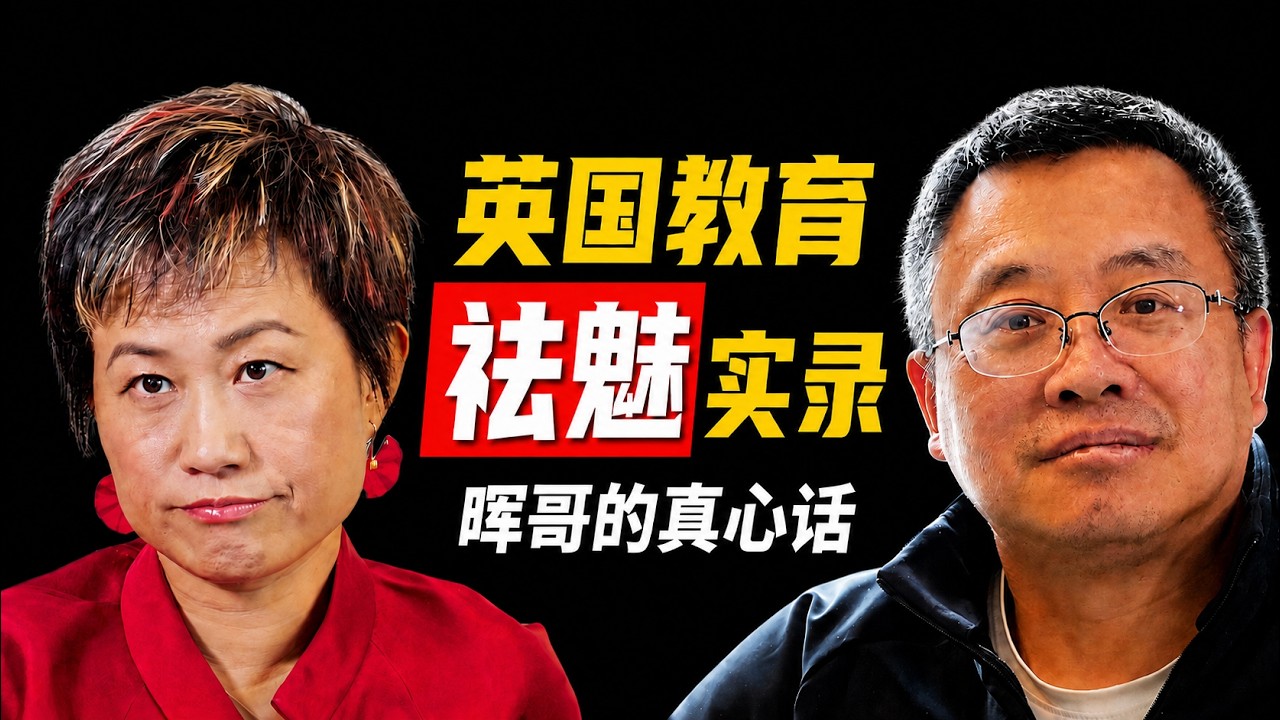
How big is the gap between the British education you imagined and the one you experience after spending 2 million yuan? Hui Ge is from Chengdu, holds an EMBA from Cheung Kong Graduate School of Business and was once an executive at a listed company; in 2019 he quit to spend time with his family. In 2024 he brought his wife and young daughter to the UK to accompany his elder son through secondary school. Before they left, he thought British education was advanced, the environment open, and his children would get to see the world. After arriving, he found that changing a SIM card meant a phone call of 1 hour 40 minutes, getting a door lock fixed cost £600 and a two-week wait, school PE happened only twice a week, and the queue for NHS adolescent mental health services was nearly two years... What caught the family most off guard was their nine-year-old daughter: her mild fastidiousness about cleanliness worsened sharply in London and developed into severe OCD. She spent two hours in the shower every day, then became afraid to go out, and in the end couldn't go to school. In this episode, Hui Ge speaks with rare openness about everything from these two years of accompanying his children abroad. In this conversation, Hui Ge shares:
In this episode
◦ Why he brought his son to the UK: not a long-held plan, but the moment he was jolted awake by 'hate education' in China
◦ Five gripes about life in the UK: prices, efficiency, service, hygiene and education. Which was the biggest surprise?
◦ What British classrooms are really like: are teachers 'free-range' or 'a bit lazy'? A full comparison of PE, homework and management
◦ His daughter's OCD from mild to severe: how the London environment became the last straw
◦ The waiting trap of NHS adolescent mental health care: A&E, queues, medication and interpreting, one pitfall after another
◦ Why his daughter improved quickly within a month of returning to China, and what that says
◦ For parents thinking of sending children abroad: 600,000 yuan a year in fees, 10 million over ten years. He says it's not an investment but consumption
◦ How accompanying the children divided the couple: his wife copes better, he wants to go back. Two different adjustment curves
Chapters
- Hui Ge's background: Cheung Kong EMBA, listed-company executive, quit in 2019 to be with family
- Why the UK? Not a long-term plan, but discovering 'hate education' once his son started secondary school
- His son felt no hostility on holiday in Japan, but changed after starting secondary school, which made him decide to change environment
- His son wanted the US, his wife felt it wasn't safe; they compromised on the UK and brought the young daughter too
- Overall impressions after arriving: expensive and inconvenient. His first summary of two years
- Gripe one: a huge gap in everyday convenience. Replacing a door lock: £600 vs £20 yourself, plus a two-week wait for someone
- Gripe two: 'ridiculously low' efficiency. Changing his son's SIM card, two O2 shops passed the buck
- Getting a pay-as-you-go SIM took a 1 hour 40 minute phone call; in China it takes two minutes with an ID card
- The British value enjoyment and won't improve efficiency. He says 'this society must be in decline'
- Gripe three: British schools fell short of expectations. 'The magic has gone', as his wife put it
- PE only twice a week, compared with two or three hours of sport a day at an American international school in Chengdu
- Are British teachers 'free-range' or 'a bit lazy'? A comparison with teachers in China
- His son's learning in the UK: he's seen the world, but his academic foundations aren't as solid as in China
- Gripe four: Britain is dirty. Tube seats, pigeon droppings, public hygiene all below expectations
- Hui Ge's financial cushion: investment income covers costs so he doesn't need to work, but the outgoings are heavy
- The hidden costs of two years abroad with the children: a broken social circle, a language disadvantage, no plan to integrate but a sense of loneliness
- Going deeper: the whole family went abroad for the son. What did the other child, the young daughter, give up?
- His daughter came to the UK at nine, loved art and had hopes for London, but found it 'so different from what I imagined'
- The young daughter's OCD: she had only been mildly fastidious, but the London environment triggered severe symptoms
- Details of the OCD episodes: showering for one or two hours after school every day, then feeling dirty again on touching anything, and showering again
- Later she was afraid to go out, feeling it was too dirty outside; the state of the toilets at her girls' school was the last straw
- At its worst: screaming, losing control, unable to go to school; her brother and parents were deeply affected too
- The road through NHS CAMHS: A&E, referrals and a wait of nearly two years
- Medication only came in December 2025, and counselling still hadn't come by the time they left the UK
- Why go back to China: easier healthcare, familiar language and environment, and a greater sense of security for his daughter
- Just over a month back in Chengdu: his daughter began going out several times a week, better than expected
- Jojo and Hui Ge's analysis: at the heart of OCD are fear and a lack of security, and home is the best medicine
- Hui Ge on his daughter's future: he's not worried about what society thinks; the family is her firmest support
- What his elder son really gained: better English, seeing the world and broader horizons, but weaker foundations than in China
- His advice on studying abroad: better not to go before upper secondary; go for university, it's better value
- 600,000 yuan a year in fees, 10 million over ten years: not an investment but spending on education. Do what you can afford
- To families selling their homes to send children abroad: not advised. With waves of lay-offs at big US tech firms, lower your expectations of returns
- How accompanying the children affected the marriage: his wife adapted better, he resisted more. Subtle changes over two years
- Hui Ge's last word: he's not against going abroad, but be mentally prepared. Once your child leaves, accept they may not come back
- Jojo's closing: Hui Ge's experience is a true portrait of a generation of parents accompanying their children abroad